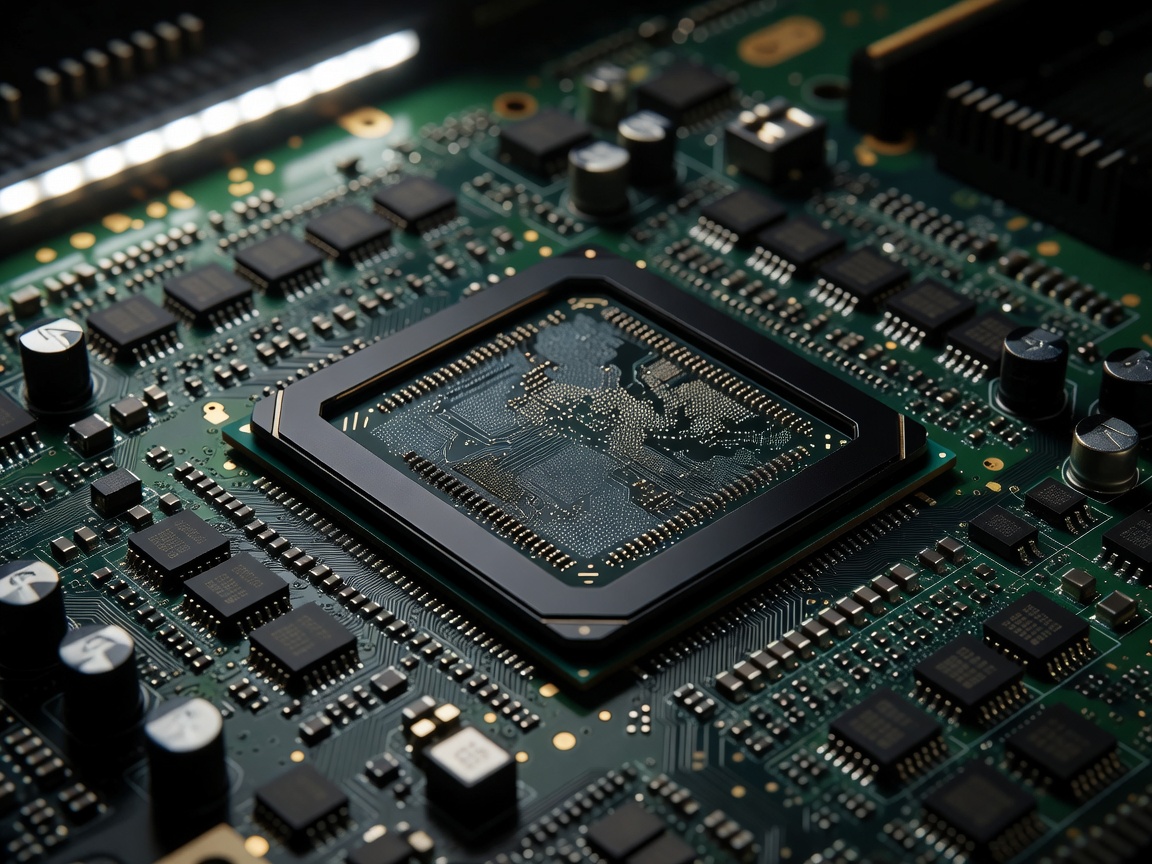
The traditional vehicle architecture is highly distributed, often comprising over a hundred single-function Electronic Control Units (ECUs). This topology simply cannot scale to meet the computational demands of Advanced Driver Assistance Systems (ADAS) and autonomous driving. To solve this, the industry is migrating toward centralized architectures powered by automotive edge computing.
Zonal Architectures and Central Compute
Instead of mapping logic to physical locations via discrete ECUs, modern architectures group hardware spatially into "Zones". A zone controller acts as an I/O hub, aggregating data from local sensors and actuators, and forwarding it via high-speed Automotive Ethernet to a Central Compute node. This central node is a high-performance computer (HPC) running on advanced System-on-Chip (SoC) silicon.
By consolidating processing power at the edge (inside the vehicle), manufacturers drastically reduce the weight and complexity of the wiring harness, while abstracting hardware from software. This abstraction is what allows an application developer to write a feature (like a new braking algorithm) without needing to intimately understand the underlying microcontroller pinouts.
Hypervisors and Mixed-Criticality Systems
When you centralize compute, you inevitably mix workloads of varying importance. The infotainment system running a navigation app must coexist on the same silicon as the braking control logic. If the navigation app crashes, the brakes must remain fully operational.
Automotive edge computing relies heavily on Type-1 (bare-metal) Hypervisors. A hypervisor partitions the underlying SoC resources—CPU cores, memory, and I/O—into strictly isolated Virtual Machines (VMs). A mixed-criticality system might run a General Purpose OS (like Automotive Grade Linux or Android Automotive) in one VM for infotainment, and a Real-Time Operating System (RTOS) in a separate VM for safety-critical ADAS functions. The hypervisor guarantees that a fault or resource spike in the General Purpose OS cannot impact the deterministic timing required by the RTOS.
RTOS vs. GPOS at the Edge
- Real-Time Operating System (RTOS): Prioritizes deterministic execution. When a sensor detects an obstacle, the RTOS guarantees a response within a strict microsecond deadline. Used for steering, braking, and powertrain.
- General Purpose OS (GPOS): Prioritizes throughput and rich feature sets. Used for media rendering, cloud connectivity, and user interfaces, where a dropped frame is acceptable but dropping a network packet is not.
Data Filtering and Cloud Offloading
While edge computing keeps latency low, the cloud remains essential for fleet-wide machine learning model training. However, streaming all raw sensor data to the cloud is economically and technically unfeasible due to cellular bandwidth constraints. Edge computing nodes act as intelligent filters. They process the raw camera and LIDAR feeds locally, identify edge cases or novel scenarios (such as an unrecognized traffic sign configuration), and upload only those specific metadata snippets to the cloud for model refinement. This symbiotic relationship between the vehicle edge and the cloud backend is the defining characteristic of the modern SDV data loop.